Magical Ingredients Fact file: Valeriana Officinalis
Dig out your trowels (!) witches and wizards for now’s the perfect time to begin harvesting one of the fundamentals of your magical store cupboard. Valerian or Valeriana Offininalis is an ancient and highly effective medicinal herb and an essential component of many a good sleeping draught or feel good potion!
You will find it mentioned and called for in many of our potions; so if you have access to it then it is well worth harvesting some in the coming month or two – the root and flowers can be dried for future use and will be just as effective in this manner.
Do remember to treat our native wild plants with respect – take another look here for more information on the correct conscientious harvesting and preparation of wild ingredients.
Family: Valerianaceae
Common Name: Valerian
Other names: Sometimes also known as Wild Heliotrope/ Garden Heliotrope/ Nature’s Valium/All Heal/ Capon’s Tail
Latin Name: Valeriana Officinalis (this may come from the Latin Word Valere which means to be “in health”.)
Distribution: Most of Europe. Temperate Asia to Japan.
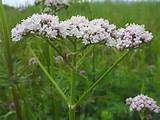
Basic Description: A hardy perennial plant with heads of highly scented light pink or white flowers.
Scent: The scent is pretty but heavy and musky – not everyone likes it - it is sometimes called the Lotus of Europe; and it is indeed very similar to this heady exotic scent. The roots and leaves of this plant have a very distinctive smell which grows more pungent with age. Some say they put you in mind of a smelly sock!
Where does it grow: Dislikes Acid soils. Scrub, Hedgerows, woods. Dry and damp soils.
Similar species to watch out for:
Red Valerian/ White Valerian –
It is very common for amateurs to confuse this plant (especially in pictures online – many of which are stunningly ill informed- it’s a good job it’s not poisonous!) with Red Valerian or White Valerian. In fact Red Valerian and White Valerian, despite their very similar and confusing names, are actually not in the Valerianaceae family at all; they are a member of the Centranthus family.
Here is a picture of Red Valerian and White Valerian. You will notice that the flowers are very similar indeed – although the Red Valerian is a darker pink than Valeriana Officinalis.
The main difference between these two plants are the leaves, so it is these that you should pay attention to. The leaves of a Red Valerian or White Valerian are waxy and a pointed oval shape, whereas the leaves of Valeriana Offinalis are smaller, narrow, and clustered together along each stem – they look almost fernlike.
Here are the leaves of a
Red/White Valerian
True Valerian/Valeriana Officinalis
Red Valerian and White Valerian are considered safe to ingest, so fortunately you cannot come to much harm by mistaking these for Valeriana Officinalis; although you would miss out on the potent effects as Red/White Valerian do not contain the same relaxant chemicals as Valeriana Officinalis.
The Carrot Family:
Members of the carrot family are often to be found growing in the same sort of environments as the ones favoured by Valerian – and you should watch out for these as certain members of the carrot family, such as Hemlock, are poisonous. In addition, the flowers of members of the carrot family can seem quite similar to the beginner – small white flowers in an umbel formation (which means on the end of stalks rising from a single point, like the spokes of an umbrella...)
Of course, as you know many members of the carrot family, such as Wild Carrot and Wild Parsnip and Wild Caraway are edible and very useful – however the danger of mistaking Hemlock for one of these for the beginner is so great that it is best not to attempt it on your own at this stage.
The best way to avoid harvesting Hemlock instead of Valerian is to avoid Valerian with white flowers, as members of the carrot family all have white flowers themselves – and focus on harvesting the light pink variety of Valerian.
Danger Level: Low. There is no danger in mistaking Red/White Valerian for Valeriana Officinalis. Some members of the carrot family such as Hemlock are poisonous and grow in similar environments; however these have white flowers and dissimilar leaves. If you stick to pink Valerian you should be safe. If in doubt do ask for the second opinion of an expert – and never ingest anything you are not 100% sure about.
Preparation: Boiling water will destroy the active chemicals in this plant. Heat will draw them out into water – just make sure your water is not quite boiling. Leaves, roots, stalk, and flowers can be used fresh. Alternatively they can be slowly air dried in your kitchen and stored for future use. Traditionally it is the roots that are most often used as they are the most potent part of the plant, however it is often kinder to use flowers and leaves instead rather than uprooting the plant – just use more of these to achieve the same effects.
Possible side effects: These are all extremely rare – Valerian is considered safe to use. Headaches, heart palpitations, insomnia, nausea, giddiness.
Other safety information: May affect your alertness so do not drive if you have taken Valerian within the last few hours. Valerian may increase the effect of other sedatives, such as alcohol, so it is best not to combine these. There is some evidence to suggest that Valerian may be habit forming – it’s powerful stuff and is not called “nature’s Valium” for nothing! (I have found it safe to use though and can attest that I am not addicted to it!)
Active ingredients: Valerian contains many different types of Valeopotriates and Sesquiterpenes with opposing effects. This means that it has the potential to regulate several dissimilar conditions. Valeopotriates are GABA-mimetic inhibitors – meaning they have an effect on excitability in the brain.
Use in Magical Potions: A potent addition to sleeping draughts and healing potions. This plant is a sedative, relaxant, anti depressant, and a tranquiliser. It is used to treat Anxiety Disorders, Insomnia, Depression, Alcohol/Drug Withdrawal, Stage Fright, and it is said to stimulate powerful Lucid dreams. It is colloquially known as Nature’s Valium; and indeed it does seem to produce many of the same effects.
Interesting Miscellaneous information: Most cats and Rats are absolutely wild for Valerian-like Catmint, it makes them a little bit high! Some say the strange musky smell of the roots and leaves are similar to the smell of these animals in heat, others say it is the potent Valeopotriates... Legend has it that the Pied Piper of Hamlyn had his pockets stuffed full of Valerian.