Celtic Faerie Lore - Useful Archetypes to summon in your magic spells
One of the most interesting things about so many of the popular stories, books, TV shows and films of the modern era is the influence they are taking from stories and tales that have stood the test of time. People today may feel as though they are the first generation to learn about magic, witchcraft, mythical creatures and distant lands where things are very different but of course, this is not the case.
Some of the best stories that have been passed along from generation to generation, many of which have formed the foundation for many of today’s great stories, hail from Celtic folklore. There are many different elements to Celtic mythology but amongst the most popular would be the idea of faeries and the faerie lore that surrounds them.
Of all the threads and themes that run through the Celtic nations, the notion of the race of people being diminutive stands tall, as it were! Today, the Celts represent the Irish, the Scottish, the Welsh alongside other parts of Europe and even to this day, immediately identifiable traits like red hair and being small in size but big in stature exist.
However, in the Celtic faerie lore, there has been focus on the plight of these small people, being forced from their homes by rampaging hordes of humans. Their difference in height made them seem like a different race of people and this is how mythology starts to build. Over time, there was a growing belief that the Celts were possibly spirits and their disappearance was down to them transferring to an Otherworld or at least setting up home in hidden hills, by going underground or even by traversing the Seas to find a new life.
The faerie folk of the Celtic stories, often referred to as the Sidhe, were believed to be immortals who would be found in cairns and barrows. There are many different realms in the Otherworld, including:
· Mag Mell – The Pleasant Plain
· Emain Ablach – The Fortress of Apples or The Land of Promise or the Isle of Women
· Tir na nog – The land of Youth
Given the diverse nature of Celtic culture and the fact that it crosses over a number of countries, there are different elements of Celtic mythology depending on where the stories originate from. The Celtic stories that originate from Ireland will deviate slightly from the ones that originate from Scotland. The overall message and ideas are consistent but the stories, people and places may differ.
A popular point of Irish Celtic mythology saw the people from the Tuatha De Danann retreat to an otherworld realm after a group called the Milesians arrived in Ireland and quickly established themselves as the Sidhe (which is pronounced shee). As time passed, these folk became known as Gods and Godesses in Ireland and they also developed prominence as the Kings and Queens of the faerie folk and with the Celtic people.
There are many different faeries and of course, as events occur and stories develop, there can be faeries looking to do good and faeries looking to do bad to other people. This is particularly highlighted in Scottish folklore with two groups. The Seelie Court is the group that tries to help others but can still be dangerous whereas the Unseelie Court have malice in their heart and often seek to cause harm. There may not be much difference between the Seelie Court causing pranks for amusement and the Unseelie Court aiming to cause genuine damage but this conflict lies at the heart of faerie mythology and provides some great stories.
One of the most common faerie story elements is the “changeling” where faeries steal human babies and replace them with child faeries. There are also stories of human abduction so there can be some darker moments in this lore. If you felt that faeries were all sweetness and light, you may have some interesting reading ahead!
What do these magical faeries look like?
One of the best descriptions of the faeries can be traced back to 1691. The Reverend Robert Kirk, a minister for the Parish of Aberfoyle in Stirling, which is in Scotland, delivered this passage which provides an excellent starting point for anyone wishing to know what faeries look like. From ‘The Secret Commonwealth of Elves, Fauns and Faeries’, Kirk’s manuscript, her wrote:
“These Siths or Faeries they call Sleagh Maith or the Good People...are said to be of middle nature between Man and Angel, as were Daemons thought to be of old; of intelligent fluidous Spirits, and light changeable bodies (lyke those called Astral) somewhat of the nature of a condensed cloud, and best seen in twilight. These bodies be so pliable through the subtlety of Spirits that agitate them, that they can make them appear or disappear at pleasure.”
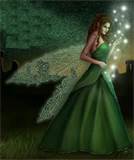
In modern culture, faeries are commonly seen as being young, commonly with wings, small in size and quite often female. Perhaps Disney has a lot to do with this modern opinion because in older times, there was a wide range of faeries to consider. There were tall faeries, confident faeries, faeries who offer great wisdom and even trolls who have assumed the wisdom and knowledge that is commonly associated with faeries.
Small faeries have always been part of the folklore but up until recently, there was always a focus on larger faeries who would reach the heights of small children. There was also a focus on the fact that sometimes the small size of faeries was down to magic and choosing to be small to react to certain situations as opposed to a faerie always being that size.
Where to find magic faeries?
The dryads (the water sprites) were unsurprisingly found near lakes and waterfalls and the wood sprites, were naturally found near wood. These may not be imaginative but the descriptive titles help people to associate with these faeries straight away. The wood sprites stayed in trees and forests with oak, ash and hawthorn trees being notable homes. In ancient Celtic mythology, trees were often sacred and many tales of trouble and terror befell people who did not treat the woods with respect.
There are many magical and mysterious faerie legends in the Celtic tradition. Whether you personally believe in faeries there is always magic in the world if you know where to find it. Beside every chuckling waterfall in every forest glade you can feel the spirit of the Dryad. On every wild and lonely moor you can capture the essence of the legendary Tuatha de Danaan. In quiet, secret places you can almost, but not quite, catch a glimpse of a faerie...
Some witches and wizards at Pendragon's School of real magic like to call up the archetypes of Celtic Faeries to help them with their magic spells. I've heard this can be a most effective way of channeling certain powerful energies.